

The Home Buying Process: Steps to Buying a House
By Bill Burke, REALTOR® | Updated September 2026
Bill Burke is a REALTOR® licensed in New Hampshire and Massachusetts and has been helping home buyers and sellers since 2008.
Buying a home involves a lot more than finding a property you love and making an offer. There are decisions to make before you begin your search, deadlines to manage once you're under contract, and several people involved between pre-approval and closing.
At BurkeLord Real Estate, we help buyers throughout Southern New Hampshire and Northern Massachusetts understand what comes next at each stage. While every transaction is different, understanding the home buying process step by step can help you prepare for the decisions ahead.

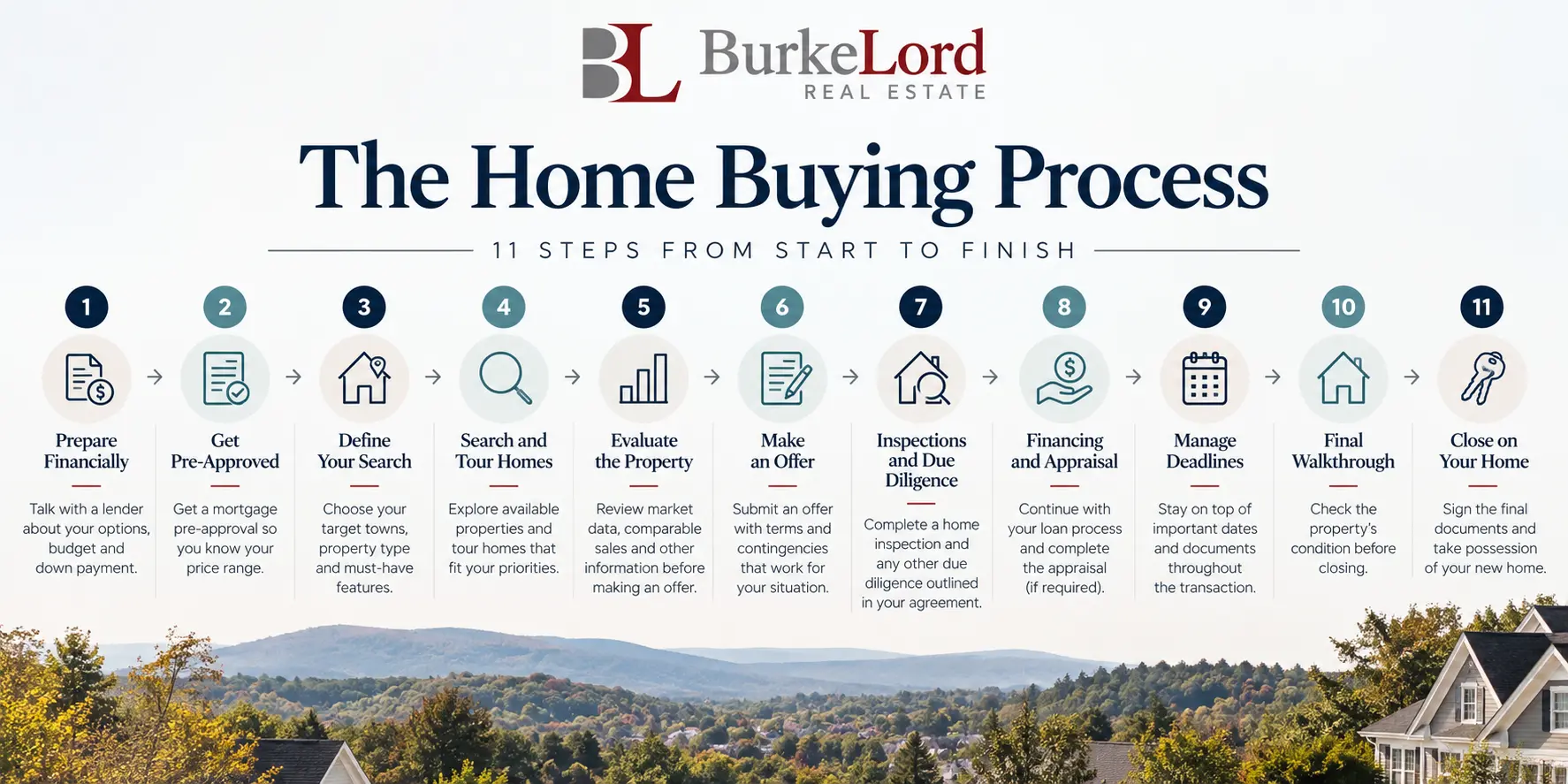
The Steps at a Glance
The exact order can vary depending on the property, financing, contract terms and whether you're buying in New Hampshire or Massachusetts, but most buyers will move through these stages:
- Prepare financially and talk with a lender
- Get pre-approved for a mortgage
- Define your home search
- Search for and tour homes
- Evaluate a property before making an offer
- Prepare and submit your offer
- Complete inspections and due diligence
- Continue financing and appraisal
- Manage contract requirements and deadlines
- Complete your final walkthrough
- Close on your home
If you're buying your first home, don't worry about memorizing every step before you begin. A big part of the process is understanding what matters when you reach that stage.
How Long Does the Home Buying Process Take?
There isn't one timeline that applies to every home purchase. How long it takes depends on how quickly you find the right home, your financing, the terms of your offer, inspections, appraisal, closing requirements and other details of the transaction.
Some buyers find a home quickly, while others may search for much longer. Once you're under contract, the timeline will depend on the terms of your agreement and the steps that need to be completed before closing.
If you need to sell another home before you buy, are relocating, or have other timing considerations, those can affect your overall timeline too.
1. Prepare Before You Start Looking at Homes
One of the most common mistakes we see is buyers beginning to tour homes before they've spoken with a lender.
It can be tempting to start with the fun part, but understanding your financing first gives the rest of your home search a much stronger foundation.
A lender can help you understand your financing options, estimated monthly payment, down payment requirements, closing costs and how much you may qualify to borrow. What you qualify for and what you're personally comfortable spending aren't necessarily the same number, so this is also the time to think about your budget and the monthly payment that works for you.
If you don't already have a lender, BurkeLord can connect you with local lenders we've worked with.
2. Get Pre-approved for a mortgage
For buyers who will be financing their purchase, mortgage pre-approval is an important early step.
Your lender will review financial information to determine the loan amount you're qualified to borrow, subject to the lender's requirements and final approval. That gives you a much more useful price range for your home search.
Pre-approval also helps you prepare for the point when you find the right property and want to make an offer.
We generally want our buyers to have this step in place before seriously looking at homes, rather than finding a house first and trying to arrange financing afterward.
3. Decide What You're Looking For
Once we understand your financing and timeline, we start narrowing the search.
That means more than choosing a price range.
We talk about the towns or areas you're considering, property type, number of bedrooms, size, yard requirements, commute and other priorities. Just as important, we separate your requirements into needs, wants and deal breakers.
Those distinctions become important once you start seeing actual homes.
A house may not check every box. Knowing which features matter most makes it easier to evaluate each property without losing sight of why you're buying in the first place.

4. Search for Homes and Start Touring
Now the home search becomes much more focused.
You'll review available properties and tour the homes that appear to fit your priorities. As you see more houses, your original list may change. That's normal.
You may discover that a feature you thought was essential isn't as important as you expected, or that something you hadn't considered becomes a priority.
This stage isn't just about finding a house you like. It's about learning enough about the property, location and market to decide whether a home deserves serious consideration.
Not every home search happens under ideal circumstances. You may be relocating from another state, unable to get away from work, or simply unable to reach a property before offers are due.
We've worked with out-of-state buyers who couldn't attend a showing in person before a property was likely to sell. In those situations, we've walked through the property with the buyer on FaceTime and gathered additional photos, videos, floor plans and available property documents to give them more information to work with.
A virtual showing isn't exactly the same as standing inside the home yourself, but sometimes buying a home requires you to make decisions with the time and information available. The goal is to understand what you know, what you don't know yet, and what additional information you need before deciding how to proceed.
Search Homes for Sale
5. Evaluate the Property Before Making an Offer
Finding a home you love is only the beginning of the offer decision.
Before our buyers make an offer, we research information that can help them understand the property and current market conditions.
Depending on what's available and relevant to the transaction, that can include:
- Recent comparable sales
- Pending comparable properties when information is available
- Days on market
- Price changes
- Available property disclosures and documents
- Current activity or competing offers when that information can be obtained
- Information about the seller's circumstances when appropriately available through the listing agent
The list price is only one piece of the picture.
Before deciding what to offer, it helps to understand how the home compares with other properties buyers have recently purchased and what's happening with the listing itself. A home that was listed yesterday with significant activity presents a different situation from one that has been sitting on the market or has already had price adjustments.
Looking at comparable sales and current market activity can help you evaluate how the asking price compares with the market and what you may be comfortable offering. It doesn't produce a magic number that guarantees what a home is worth or what a seller will accept. It gives you better information for deciding what you're comfortable offering and how aggressively you want to compete.

6. Prepare and Submit an Offer
An offer involves more than choosing a purchase price.
Depending on the transaction, there may be decisions involving contingencies, inspection terms, financing, deposits, closing timing, appraisal considerations, buyer-agent compensation and other terms.
This is also where market conditions matter.
A strong offer isn't automatically the offer that gives up the most protections or offers the highest possible price. The goal is to understand the tradeoffs you're making and structure an offer appropriate for the property, your circumstances and the current market.
If the seller accepts the offer, the transaction moves into the next stage. The seller may also reject it or respond with different terms, which can lead to further negotiation.
What If You Need to Sell a Home Before You Buy?
Not every buyer can make an offer without considering another home they already own.
If you need to sell and buy at the same time, planning becomes an important part of the purchase. The right approach depends on your finances, timing, current home and the market you're buying into.
There are several ways this can be approached. Sometimes it means preparing your current home for market in advance so it's ready to list quickly. In other situations, it may make sense to explore coming-soon or off-market opportunities, look for properties where a seller may be more receptive to an offer involving a home-sale contingency, or consider whether temporary housing could put you in a stronger position for the next purchase.
There isn't one correct strategy for every move. The important part is addressing the sell-and-buy problem before you find the house you want, not after.
7. Complete Your Inspection and Due Diligence
After an offer is accepted, inspections and other due-diligence steps may follow depending on your contract and the property.
A professional home inspection can help you learn more about the condition of the home and identify issues that may require additional investigation.
When applicable, BurkeLord can attend the inspection with our buyer and help review what comes next after the inspection report is available.
An inspection report doesn't automatically tell you what to do next. It may contain minor maintenance items, issues that deserve further evaluation by a specialist, and more significant concerns. What matters is understanding the findings in the context of the property and your transaction.
Inspection findings can also affect the transaction itself. Sometimes an inspection uncovers concerns that lead to additional questions, further evaluation by a specialist, or discussions between the buyer and seller about how to move forward.
That's why the inspection stage isn't simply “get an inspection and ask the seller to fix everything.” You need to understand what was found, which issues matter to you, what your agreement allows, and what options are available before deciding how to proceed.
This is one area where New Hampshire and Massachusetts transactions can differ, which is why we don't treat every purchase as though it follows exactly the same template.

8. Continue Financing and Complete the Appraisal
Getting pre-approved was the beginning of the mortgage process, not the end.
Once you have a property under contract, you'll continue working with your lender to satisfy the requirements for your loan. Your lender may request updated documents or additional information as underwriting progresses.
For many financed purchases, the lender will also require an appraisal.
An appraisal and a home inspection serve different purposes. The inspection is primarily about helping you understand the property's condition. An appraisal provides an opinion of value that the lender uses as part of its lending decision.
During this stage, it's important to respond promptly to lender requests and avoid making major financial changes without first discussing them with your lender.
9. Keep Track of Dates, Documents and Next Steps
Getting your offer accepted is exciting, but it isn't the finish line. Once you're under contract, several parts of the home buying process can be happening at the same time.
You may be working through inspections, financing, appraisal, insurance and closing preparations, all while keeping track of dates established by your agreement. Your lender or other professionals may also request documents or information along the way.
This is where staying organized and responding promptly becomes especially important. Missing a deadline or waiting too long to provide requested information can create unnecessary problems in a transaction.
You won't be expected to manage all of this on your own. Once you're under contract, Jennifer helps keep the transaction moving by tracking important dates and coordinating with the lender, the other agent, the closing company and other professionals involved. Bill stays involved throughout the transaction and is available when additional strategy or negotiation is needed.
Your job during this stage is to stay available, watch for requests and ask questions when something isn't clear. The people handling the transaction should help you understand what's due, what's happening next and when you need to take action.
10. Complete the Final Walkthrough
Shortly before closing, buyers typically have an opportunity to complete a final walkthrough of the property.
This isn't another full home inspection. It's a final opportunity to see the property before closing and make sure its condition is consistent with what you expect based on the transaction and any agreements that have been made.
You'll want to pay attention to whether the property is in the expected condition, whether agreed-upon items remain with the home, and whether anything significant appears to have changed since you last saw it.
If something unexpected comes up, bring it to your agent's attention before closing so the appropriate next step can be determined.

11. Close on Your New Home
Closing is the final stage of the purchase.
The exact closing process and documents will depend on the transaction, financing and whether you're purchasing in New Hampshire or Massachusetts.
Before closing day, make sure you understand where and when the closing will take place, what you need to bring, and how any funds required for closing should be delivered. Follow the instructions provided by the professionals handling your transaction, and verify any unexpected request involving money or wiring instructions before sending funds.
When the Purchase Doesn't Go According to Plan
A step-by-step home buying guide makes the process look very orderly. Real transactions aren't always that neat.
An inspection can uncover an unexpected problem. A closing date may need to change. You may need to sell your current home before you can complete the next purchase. Or you may find the right property before you're in the ideal position to buy it.
When something changes, the next step depends on the problem. It may mean negotiating different terms, adjusting the timeline, coordinating with your lender or other professionals, considering temporary housing, or taking another look at whether the purchase still makes sense for you.
This is where it helps to understand the home buying process without expecting every transaction to follow a perfect checklist. The steps give you a roadmap, but the details of your purchase determine how you move through them.
Buying in New Hampshire vs. Massachusetts
The basic steps to buying a house are similar on both sides of the state line, but the details aren't always identical.
Contracts, inspections, disclosures, closing procedures and the professionals involved can differ between New Hampshire and Massachusetts transactions.
That's one reason we explain the process as buyers reach each stage rather than handing them a checklist and expecting every transaction to follow it exactly.
BurkeLord Real Estate works with buyers in both Southern New Hampshire and Northern Massachusetts, so when a state-specific issue affects your purchase, we'll explain how it fits into your transaction and involve the appropriate lender, attorney, inspector, closing professional or other specialist when necessary.
First-Time Home Buyers: You Don't Have to Know All of This Yet
If you're buying your first home, terms like pre-approval, contingencies, appraisal, underwriting, and final walkthrough may all be new.
That's expected.
We explain the overall process during the initial buyer consultation and then go through individual stages again as you reach them. That way, you don't have to remember everything from one conversation.
One thing we encourage first-time buyers to be careful about is relying too heavily on advice from friends or family whose last home purchase may have happened years ago.
Their intentions may be good, but contracts, market conditions and common practices change. Questions about your particular purchase are better addressed by the professionals actively involved in the transaction.
Who May Be Involved in Your Home Purchase?
Buying a home usually involves more than a buyer, seller and two real estate agents.
Depending on your purchase, you may also work with a:
- Mortgage lender
- Home inspector
- Real estate attorney
- Closing or title professional
- Insurance professional
- Appraiser
- Other property specialists when needed
BurkeLord has relationships with local real estate professionals and vendors and can provide contacts when you need them. You're not expected to arrive at the beginning of the process with every professional already lined up.
Ready to Start the Home Buying Process?
If you're still learning, use this guide as a roadmap for what comes next.
If you're ready to begin seriously looking for a home, the next step is understanding how buyer representation works and how BurkeLord helps buyers evaluate properties, prepare offers, negotiate and manage the transaction through closing.
Learn About Working With BurkeLord as Your Buyer Agent

.png)

Social